One of the questions customers regularly ask is: “Is a shipping container actually suitable for furniture?”
The answer is yes. Households across the UK use shipping containers while moving house, renovating, downsizing, working away or creating extra room at home. The condition of the furniture when it comes back out depends less on the word “container” and more on whether the unit is maintained properly and whether the furniture was clean, dry, protected and loaded sensibly.
This guide explains what furniture can be stored, how to prepare it, common mistakes to avoid and how to keep belongings in good condition during longer storage periods.
Why shipping containers work well for furniture
Shipping containers are designed to protect goods during international transport. A properly maintained storage container is strong, secure and weather-resistant. It also provides a large, clear internal space without awkward corridors or lifts.
At a drive-up facility, customers can usually park close to the unit. That means fewer handling stages and less distance to carry sofas, mattresses, wardrobes and boxes. You can see more about this setup on the Container Storage Preston page.
What furniture can be stored?
Most normal household and office furniture can be stored safely, including:
- Sofas and armchairs
- Dining tables and chairs
- Beds and bed frames
- Mattresses
- Wardrobes
- Chests of drawers
- TV units and coffee tables
- Office desks and chairs
- Clean, dry garden furniture
Many customers use a 20ft container for the contents of a typical home, although the exact capacity depends on furniture dimensions, dismantling and loading efficiency.
How to prepare furniture for container storage
Clean everything first
Dust, food residue and moisture should be removed before storage. Furniture that enters storage clean and completely dry is much more likely to come out in the same condition.
Use suitable protective covers
Protect sofas, mattresses and finished surfaces from dust and rubbing. Breathable furniture covers are often preferable to sealing everything tightly in plastic, because plastic can trap moisture if the item was not fully dry.
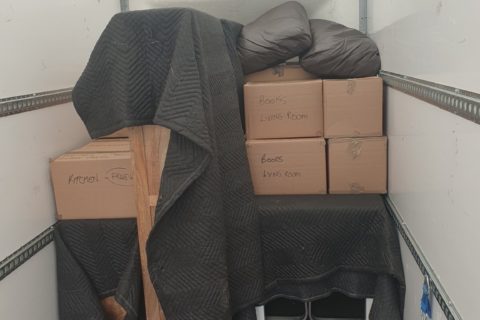
For moves into storage, Hampson & Mealey uses practical protection such as mattress bags and transit blankets. The Packing Services and Packing Crates for House Moves pages explain the wider packing options.
Empty drawers and cupboards
Removing heavy contents makes furniture safer to carry and reduces stress on joints, runners and fixings. Pack the contents into labelled boxes rather than leaving them loose inside furniture.
Disassemble large furniture where practical
Removing table legs, dismantling bed frames and separating large wardrobes can create more usable space and reduce the risk of accidental damage. Keep fittings together in labelled bags and attach them securely to the relevant item.
Protect polished and fragile surfaces
Use blankets, cardboard or suitable covers between items. Avoid placing hard edges directly against polished wood, glass or delicate finishes.
How should furniture be stacked?
Heavy and stable items should go at the bottom. Lighter items should not be expected to support unnecessary weight. Keep frequently needed boxes or furniture near the front and leave a narrow access route when regular access is important.
Good loading is not simply about fitting the maximum amount inside. It is about keeping the load stable and protecting each item for the full storage period.
Common furniture-storage mistakes
Wrapping damp furniture in plastic
Plastic can trap existing moisture. Make sure furniture is completely dry and use breathable covers where appropriate.
Storing appliances without preparation
Fridges, freezers and washing machines should be clean, drained and dry. Doors should be left slightly open where safe to prevent stale odours and trapped moisture.
Forgetting labels
After several months, it is difficult to remember which box contains important kitchen items, paperwork or children’s belongings. Clear labels and a simple inventory save time later.
Blocking everything in
If you expect to access the unit, do not place frequently needed items behind an entire house load. Plan the order before loading.
Placing furniture directly against potentially damp items
Garden tools, outdoor furniture or recently cleaned items should be completely dry and separated from soft furnishings.
How long can furniture stay in a shipping container?
There is no fixed time limit. Properly prepared furniture can remain in secure, weatherproof storage for months or several years. Customers commonly use storage during:
- House moves
- Renovations
- Temporary work abroad
- Probate and estate administration
- Downsizing
- Relationship changes
- Business relocations
For a move where dates do not line up, see House Moves With Storage. For building work, see Storage During Renovations.
Is container storage safe?
Security should be checked before booking. Look for secure gated access, CCTV, maintained weatherproof containers, clear access arrangements and genuine customer reviews.
Hampson & Mealey operates a gated Kirkham storage facility with CCTV monitoring and real site photography. More details are available on Self Storage Kirkham and Self Storage Preston.
Why customers choose container storage
Container storage combines large capacity, drive-up loading, flexible terms and practical value. For many customers, loading directly from a removals vehicle or van is easier than carrying furniture through an indoor storage building.
There is also no minimum rental period with Hampson & Mealey. Customers can stay for the time they actually need, whether that is one month or several years.
Frequently asked questions
Can wooden furniture go into a shipping container?
Yes. Wooden furniture stores well when it is clean, dry and protected from rubbing or impact.
Should I wrap my sofa?
Use a clean protective cover. Breathable furniture covers are generally preferable to sealing a sofa tightly in plastic when there is any risk of trapped moisture.
Can mattresses be stored?
Yes. Mattresses should be clean, dry and protected with a suitable mattress cover. Store them in a stable position without placing damaging weight on top.
Is container storage waterproof?
A properly maintained shipping container is designed to keep weather out. Always inspect the facility, ask about maintenance and use a reputable provider.
Can antiques be stored?
Many antiques can be stored, but particularly delicate, climate-sensitive or exceptionally valuable items may require specialist advice and insurance.
Final thoughts
Shipping container storage is a practical option for household and business furniture. The important factors are the condition of the unit, site security, preparation and careful loading.
Clean and dry the furniture, protect the surfaces, label boxes and plan access before loading. With the right preparation, furniture can remain protected until you are ready to move it into a home or business.
Request a storage quote or contact Hampson & Mealey for advice on unit size, access and moving furniture into storage.