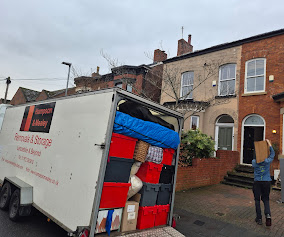
A winter house move in Lancashire is not necessarily more complicated than a summer move, but the weather changes what needs to be ready. A wet garden path, a dark driveway or a slippery step can slow down every trip between the house and the removal vehicle. Planning for those conditions before the day arrives is far better than trying to solve them with a half-loaded home.
Whether you are moving in Preston, Blackpool, Kirkham or elsewhere on the Fylde Coast, use this guide to prepare both properties for the conditions rather than relying on a good forecast.
One week before: plan the route from the house to the vehicle
Walk the entire carrying route at your current address. If possible, do the same at the new house. Look at it as someone carrying a bulky item would see it: can they see the steps, turn through the gate and reach the door without crossing a muddy lawn or negotiating loose gravel?
Pay particular attention to shaded paths where frost can linger, steep driveways, outside steps and smooth paving. Identify a suitable lawful parking location and explain any restrictions to your remover before the day. If parking close to the entrance is not practical, let them know the approximate carrying distance. That information helps the team choose a sensible loading plan.
Do not try to lift heavy paving, carry furniture through a hazardous route or make improvised ramps. Tell the removal company about the obstacle so it can assess what is safe.
Two days before: prepare a wet-weather entrance
Choose a place near each entrance where wet shoes and damp protective materials can be dealt with without blocking the doorway. Clear leaves and loose debris from your own paths where it is safe to do so. Keep a dry towel and spare mats ready, and check that external lights work.
Ask your removal team about suitable floor protection, particularly if your new home has polished timber, laminate or pale carpets. Do not lay loose plastic sheeting along the carrying route: it can slide or bunch up underfoot. Any floor protection needs to be appropriate to the surface and kept secure.
If frost is forecast, treat suitable private paths in advance according to the product instructions. Grit is not an instant solution, especially when ice has already formed. The HSE guidance on slips and trips in logistics explains why lighting, surface condition and timely treatment matter.
Pack for rain, not just for the journey
Cardboard boxes lose strength when they become wet. Keep packed cartons indoors until they are needed for loading, rather than placing them on a driveway to save time. If you are packing yourself, use sound boxes that can be closed properly and keep paper, books, photographs and textiles away from damp surfaces.
Tell the team if a piece of furniture has an especially delicate finish or if you have an item that cannot tolerate getting wet. Ask about the protection needed before it is carried out. Covers used for transit should not be assumed to make possessions suitable for leaving outdoors in heavy rain.
Have a separate waterproof bag for your personal essentials, including medication and important paperwork. Keep that bag with you, not in the bottom of a stack of moving boxes.
Allow for a shorter working day without rushing
In late autumn and winter, natural light may be fading before the move is finished. The new house may also have no curtains, lamps or working exterior lights. If you can arrange access beforehand, check lighting at the front door, stairs, hall and the rooms where furniture is going.
Keep a charged torch or battery-powered lamp accessible. Avoid trailing extension cables across the team’s route. If you are collecting keys during the afternoon, have the estate agent’s contact details and your remover’s number to hand so that a delay can be communicated promptly.
Do not plan on squeezing several separate jobs into the evening after unloading. Setting up beds and keeping a clear route to the bathroom may be more important than unpacking the entire kitchen.
What if the forecast turns severe?
Check the Met Office severe-weather travel guidance and the forecast for both locations and the route between them. Heavy snow, ice, flooding or strong winds can affect whether travel and lifting are safe. Discuss changing conditions with the removal company as early as possible; do not assume that a confirmed date means the move can proceed regardless of the risk.
If the move is tied to a property transaction, ask your conveyancer what arrangements are possible rather than assuming that you can simply postpone completion. If separate storage and delivery dates would help, discuss that option with your remover before committing to an alternative. Availability, access and the additional work need to be agreed.
Make the first night comfortable
Pack one clearly marked first-night kit: warm clothes, bedding, towels, phone chargers, toiletries, any medication and a few simple food items. Keep keys and documents with you. If children or pets are moving too, arrange a warm, quiet space away from the loading route and have their essentials ready separately.
When moving into an empty house, check the arrangements for heating and hot water with the seller or agent where possible. Do not attempt unfamiliar boiler repairs or electrical work on moving day; arrange a competent tradesperson if anything is not working.
Get a quote that takes winter access into account
When asking for a fixed-price removal quote, include both postcodes, your preferred date, any outside stairs or steep paths and photographs of parking and the entrances. Explain whether you need packing or furniture dismantling, and whether the destination may be unavailable until later in the day. Our photo checklist for removal quotes explains what to send.
Hampson & Mealey provides removals and packing across Preston, Blackpool and the Fylde Coast. If you need flexibility between properties, see our Kirkham container storage options. Request a written fixed-price removal quote and let us know about any winter access concerns at either property.