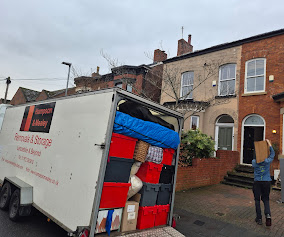
When the van is full of stock, spare fittings and equipment, finding what you need before a job can become a job of its own. For a builder, fitter, roofer or maintenance business working around Preston and the Fylde Coast, a separate storage container can be useful — but only if it is arranged for the way you actually work. This checklist focuses on planning the layout, protecting your equipment and avoiding wasted journeys. It is not a promise that every type of item can be stored or that a particular container is available.
1. Start with a working inventory, not a container size
Write down what will be stored before choosing a unit. Group items into daily-use tools, job-specific kits, bulky equipment, boxed consumables and seasonal materials. For every awkward item, note its longest dimension, approximate weight, whether it can be safely stacked and how often it needs retrieving. A storage quote based on that real list is more useful than guessing from the length printed on the outside of a shipping container.
Take photos of large items next to a familiar reference and check anything that needs clearance for its doors, handles or wheels. Allow space for safe loading and access, not just the total footprint of the goods. External container length alone does not establish usable internal floor area. If equipment is particularly heavy or unusually shaped, discuss suitability with the storage provider before booking.
2. Give frequently used tools the shortest route
Think about the sequence of a normal working morning. Items used several times a week should be near the entrance in clearly labelled, reachable groups. Reserve deeper space for slower-moving stock, while leaving a safe path to reach it. This reduces the need to unload half the container just to find a box of fixings.
It can help to organise portable tool cases by task: first-fix, finishing, electrical accessories or general maintenance. Keep labels consistent between the van and container. Use a simple handwritten shelf or zone map at the entrance so someone covering a job can find a kit without guesswork.
3. Store heavy and awkward items safely
Heavy items belong low down, on stable, suitable supports, rather than on top of lighter cartons. Keep loads balanced and do not make freestanding towers that could fall when you retrieve a case behind them. Avoid blocking the door or putting equipment where you need to climb over it.
Freestanding racking, if allowed, should be suitable for the weights and secured in a way the storage provider permits. Do not drill into, permanently modify or attach fixtures to a rented container without specific approval. Check access dimensions and handling requirements before bringing pallet-sized materials, wheeled machinery or equipment that needs mechanical lifting.
4. Protect tools from moisture and damage
Shipping containers are weatherproof structures, but items still need sensible preparation. Put tools away clean and dry, use protective cases where practical, keep boxed items away from any damp packaging and inspect stored stock periodically. A container cannot guarantee that contents will never experience condensation or temperature changes.
For delicate instruments and battery-operated equipment, follow manufacturers’ storage guidance. Do not assume batteries, fuel, gas cylinders, chemicals or other potentially hazardous contents are accepted. Ask about the site’s written prohibited-items policy before arrival, especially for trade materials with safety labels. Obtain permission for unusual items rather than treating the container as a general-purpose workshop.
5. Keep a simple stock control system
You do not need expensive software. A list with item name, quantity, storage zone and the date last checked is often enough. When a box is removed for a job, mark that change before the day gets busy. Use clear names such as “bathroom fixings — box A” instead of “miscellaneous”.
If several people need access, agree who holds the inventory and who can remove stock. If the business has valuable equipment, keep serial numbers, photos and purchase information separately from the stored items. This may also help when discussing suitable contents insurance, which needs to be arranged separately.
6. Plan visits around the actual access hours
A conveniently located storage container is still only useful when the site access matches your working schedule. Hampson & Mealey’s Kirkham site offers independent coded-gate customer access daily from 7am to 7pm, not unrestricted 24-hour customer access. If your team starts on site before that window, pack the first job’s essentials into the van the previous evening.
Work out how often you expect to visit from Preston, Blackpool, Wesham or elsewhere in the Fylde. Count the total time spent travelling and loading as well as the rental charge. Storage near your jobs may make sense, but the right choice depends on your route and the way you use the space.
7. Compare the full monthly cost
For standard new rentals, Hampson & Mealey currently advertises a 20ft container at £120 per calendar month including VAT and a 40ft container at £240 per calendar month including VAT. These are advertised standard rates, not a statement of current availability or a quotation for an unusual item or individual existing agreement. Current standard rentals have no deposit, minimum rental period or notice period; storage is charged monthly under agreed rental terms. Contents insurance is required separately.
A cheaper-looking unit across town may cost more in detours or staff time. Equally, a larger unit is not automatically better: choosing more space than you can use may waste money. Compare internal capacity, access conditions, the permitted contents and how your team loads equipment, then ask for the appropriate option.
Before you ask for a trade-storage quote
- List the largest items with dimensions and any special handling needs.
- Estimate how many boxed materials or cases will rotate in and out each week.
- Decide whether you need regular drive-up access or mostly long-term overflow space.
- Check permitted contents, insurance and any equipment-loading restrictions.
- Give an approximate start date without assuming a unit is available.
For the site’s specific offer, see trade storage near Preston and the main Kirkham storage service. You can then request a storage quote or check availability; the enquiry does not itself reserve a container.
Frequently asked questions
Should I store my whole van’s equipment in one container?
Only if it makes your jobs easier. Keep an everyday working kit in the van and use storage for items you do not need on every visit. Plan your retrieval routine before moving everything.
Can I store paint, fuel or gas bottles?
Never assume so. Ask the provider to confirm permitted contents in writing. Dangerous or restricted goods may be prohibited, regardless of the size of the container.
Does the quoted monthly price include insurance?
No. Customers arrange suitable contents insurance separately. Make sure your policy suits trade equipment, stock and the way the container will be used.
How do I know whether 20ft or 40ft is enough?
Measure your actual inventory, allow for safe access and ask about verified internal dimensions. The outside length is not a reliable promise of usable storage area, and availability has to be checked individually.