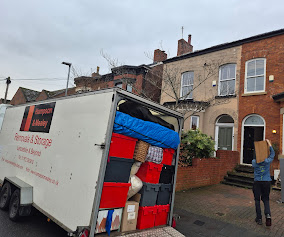
On a house move, the front door may be open for much of the morning. People carrying furniture cannot always see what is happening at floor level, and a dog that normally stays close to you may behave differently when familiar surroundings are disappearing. A good arrangement keeps your dog comfortable while allowing the removal team to work without having to manage doors, leads or pets. For households moving around Preston, Blackpool and the Fylde Coast, here is a practical way to plan the day at both addresses.
Choose who will look after your dog
A familiar friend or relative may be able to collect your dog before loading begins and keep it until the new house is ready. This removes a major complication: you can concentrate on the removal while someone else handles walks, meals and supervision. If you use a pet sitter or boarding service, arrange it in advance and make sure it suits your dog’s needs.
If your dog needs to remain with you, nominate one adult as the handler. Avoid an arrangement where everyone assumes somebody else is watching. Agree who takes over if that adult needs to collect keys or speak to the removals team. If nobody can supervise safely, reconsider the care arrangements before booking the move.
Plan the loading route and a separate dog area
Think about the route from each room to the removal van. A narrow hallway, shared entrance or front gate can become a busy crossing point. Choose a quiet, ventilated room away from that route, with familiar bedding and water. Make sure the room can be securely closed and that the dog is comfortable there. A barrier is only suitable if it actually prevents your dog from getting past it.
Tell the team at the initial walk-through exactly where the dog is. Use a clear sign on the door and agree when that room will be emptied. Do not use the hall, stairs or vehicle loading area as a temporary pet holding space. If the dog’s room must be cleared, move the dog to another secure place with its handler first; let the team know when it is safe to enter.
Even a friendly dog can be startled by a large wardrobe turning through a doorway. Avoid asking a remover carrying something heavy to stop and hold a door shut. Keeping the two activities separate prevents unnecessary interruptions and makes the day safer for everyone.
Keep the essentials out of the removal boxes
Prepare a small bag that stays with the person looking after your dog. Include its lead and harness, food, water bowl, waste bags, familiar bedding or toy, any prescribed medication and the vet’s contact details. Keep identification details up to date, including the microchip database and tag. If you are moving to an unfamiliar area, identify a suitable veterinary practice before the move.
Label the dog’s bed or other items that need to be loaded last and unloaded early, and agree this with the team. If a separate car is available, carrying those essentials yourself is often simpler than searching the van later.
Make a plan for the gap between the two houses
You might finish loading before you can get into your next property. A move involving a property chain can leave you with nowhere suitable to settle the dog for a while. Arrange a fallback with the sitter or handler rather than assuming the new house will be accessible immediately.
Transport the dog separately in a suitable vehicle, using an appropriate car restraint or secure travel carrier. Never leave it alone in a parked car or put it in a removal vehicle’s goods compartment. On a longer journey, plan appropriate supervised breaks and water. If travel makes your dog anxious or unwell, ask your vet for advice before the day.
Check the new property before letting your dog explore
Before unloading starts, check whether the garden is genuinely secure. A missing fence panel, loose gate or unfamiliar shared driveway can make a new home very different from the one you have left. Keep the dog under your control until you know the boundaries are suitable.
Set up a quiet space in the new property and agree the unloading sequence with the team so that this space is not repeatedly disturbed. Wait until the busy carrying routes are clear before introducing the dog to the rest of the house. Resume its usual routine as far as possible and seek veterinary advice if you are concerned about how it is coping.
A simple moving-day handover checklist
Before the team arrives, know the name of the dog handler, the loading-day location, the time and method of travel, the fallback location if keys are late, and the secure space at the destination. Share only the information the removal team needs to carry out the job safely. This is particularly important if there are several dogs or if one reacts strongly to strangers.
For additional animal welfare guidance, see Dogs Trust’s advice on moving home with your dog. Our guide to the order of a typical moving day can help you coordinate the practical arrangements.
Planning a house removal in Lancashire?
Hampson & Mealey provides individually quoted fixed-cost house removals. If your home has pets, restricted access or a particular loading order, explain those arrangements when you request your removal quote. It is much easier to build a realistic plan around them in advance than to work them out with the front door open.