
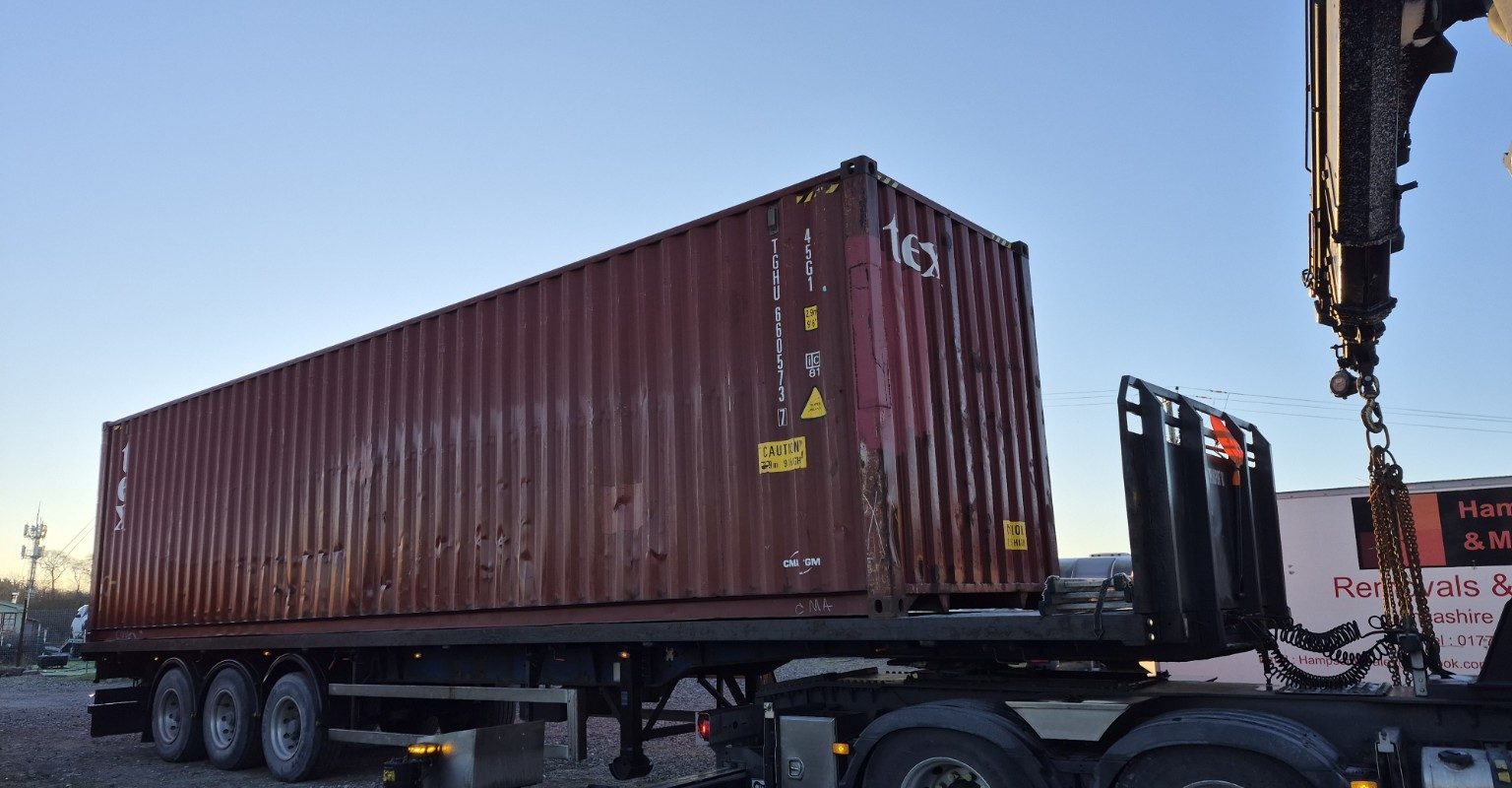
Moving a shipping container is not simply a larger version of a house removal. The transport vehicle, lifting method, ground conditions and access at both ends all need to work together before the container can be moved safely.
Start with the container itself
Confirm the container size, whether it is empty or loaded and where it is positioned. A loaded container can be a very different job from an empty one, so the contents and likely weight matter when the transport and lifting method are being considered.
Check collection access before choosing equipment
The vehicle and lifting equipment need physical room to reach the container and work around it. Gates, parked vehicles, soft ground, overhead obstructions, narrow approaches and limited turning space can all affect the job.
The lift and the transport are one plan
A container may require a HIAB, crane-assisted lift or another specialist arrangement depending on the site. It is not useful to book transport first and only later discover that the container cannot be lifted from its current position.
Destination access matters just as much
The receiving site needs enough access not only for the vehicle but for the container to be positioned where it is actually wanted. A location that looks suitable for a container may still be difficult if the lifting equipment cannot get into the correct position.
Prepare the site before the vehicle arrives
Know where the container is going, clear the working area and make sure the ground and access route are suitable for the planned operation. Last-minute repositioning can turn a straightforward lift into a much more difficult job.
Use the right specialist operator
Hampson & Mealey does not pretend every container move can be handled with its own equipment. Where appropriate, specialist vehicles, machines or operators may be coordinated through trusted contacts after the job has been properly assessed.
See specialist transport solutions and commercial haulage Lancashire for related work.